
How the Vermont Department of Health is rethinking workforce development, professional pathways, and access to care across the state
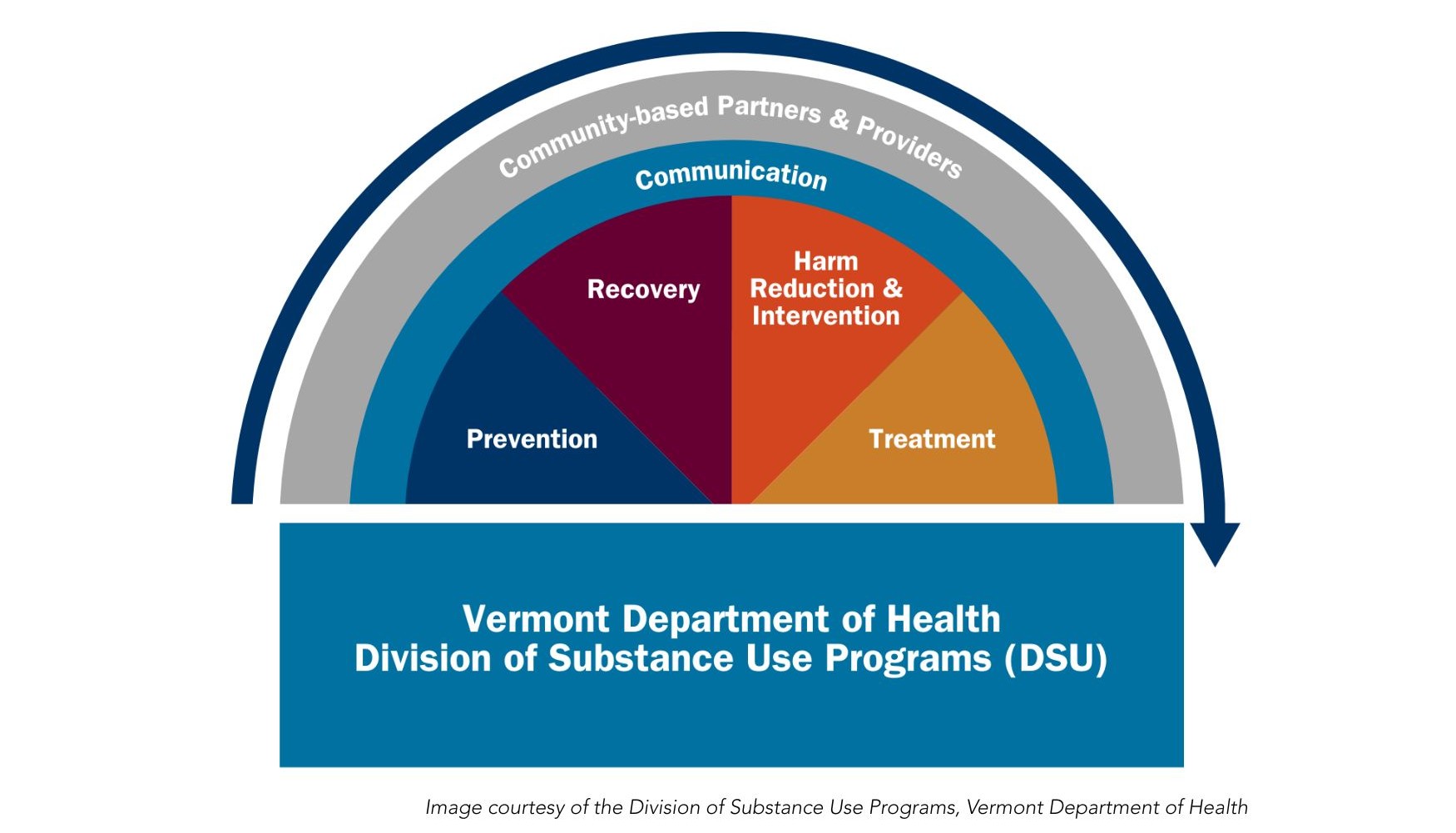
There’s a tendency to think about substance use disorder only in moments of crisis – the overdose call, the emergency department visit, the headline about fentanyl or rising overdose deaths. But long before any of those moments happen, there is an entire workforce quietly holding together the infrastructure of prevention, harm reduction, treatment, recovery, education, and support across Vermont.
And increasingly, that workforce is stretched thin.
The Vermont Department of Health’s Division of Substance Use Programs (DSU) has spent the last several years listening closely to providers, organizations, people with lived experience, and community partners across the state. What emerged from that process was clear: Vermont’s substance use system of care needed more than trainings. It needed workforce investment, stronger pathways into the field, better coordination, and more accessible professional development opportunities statewide.
That need ultimately helped shape the launch and expansion of DSU’s Workforce Development Resource Hub – a collection of online resources designed to support the enhancement of Vermont’s prevention, intervention, harm reduction, treatment, and recovery workforce.
The resource hub includes:
- Self-Paced Learning – on-demand professional development opportunities including recorded trainings, webinars, and flexible learning modules for current and aspiring substance use professionals
- Substance Use Careers – career exploration tools highlighting pathways across Vermont’s substance use workforce, including credentialing information, education pathways, workplace settings, and roles across prevention, treatment, recovery, and harm reduction services
- Training Opportunities Calendar – a statewide calendar of trainings, workshops, and workforce development opportunities related to substance use prevention, treatment, and recovery services
Rather than treating workforce development as a narrow pipeline issue, the state is beginning to frame it as something broader: a public health infrastructure issue.
A Workforce at the Center of Vermont’s Public Health Challenges
Vermont continues to face significant substance use-related challenges. According to the Vermont Department of Health, opioid-related overdose deaths remain one of the state’s leading preventable causes of death, while communities across Vermont continue to navigate the evolving impacts of fentanyl, polysubstance use, and emerging substances.
But behind every statistic is a workforce.
Recovery coaches. Prevention specialists. Peer support professionals. Social workers. Harm reduction staff. Nurses. School-based professionals. Clinicians. Outreach workers. Emergency responders. Community health workers.
Many of these professionals work in emotionally demanding environments with high rates of burnout, staffing shortages, and workforce turnover – realities directly acknowledged in DSU’s 2025-2028 Strategic Plan.
“Something we heard loud and clear in the needs assessment process… was that workforce was an area that needed attention and some more TLC,” said Roy Belcher, Director of Planning and Community Services for the Division of Substance Use Programs. “One of those areas is definitely recruitment and retention and just – do we have enough people in the field to do the work that we need to do?”
The state’s response has been intentionally expansive.
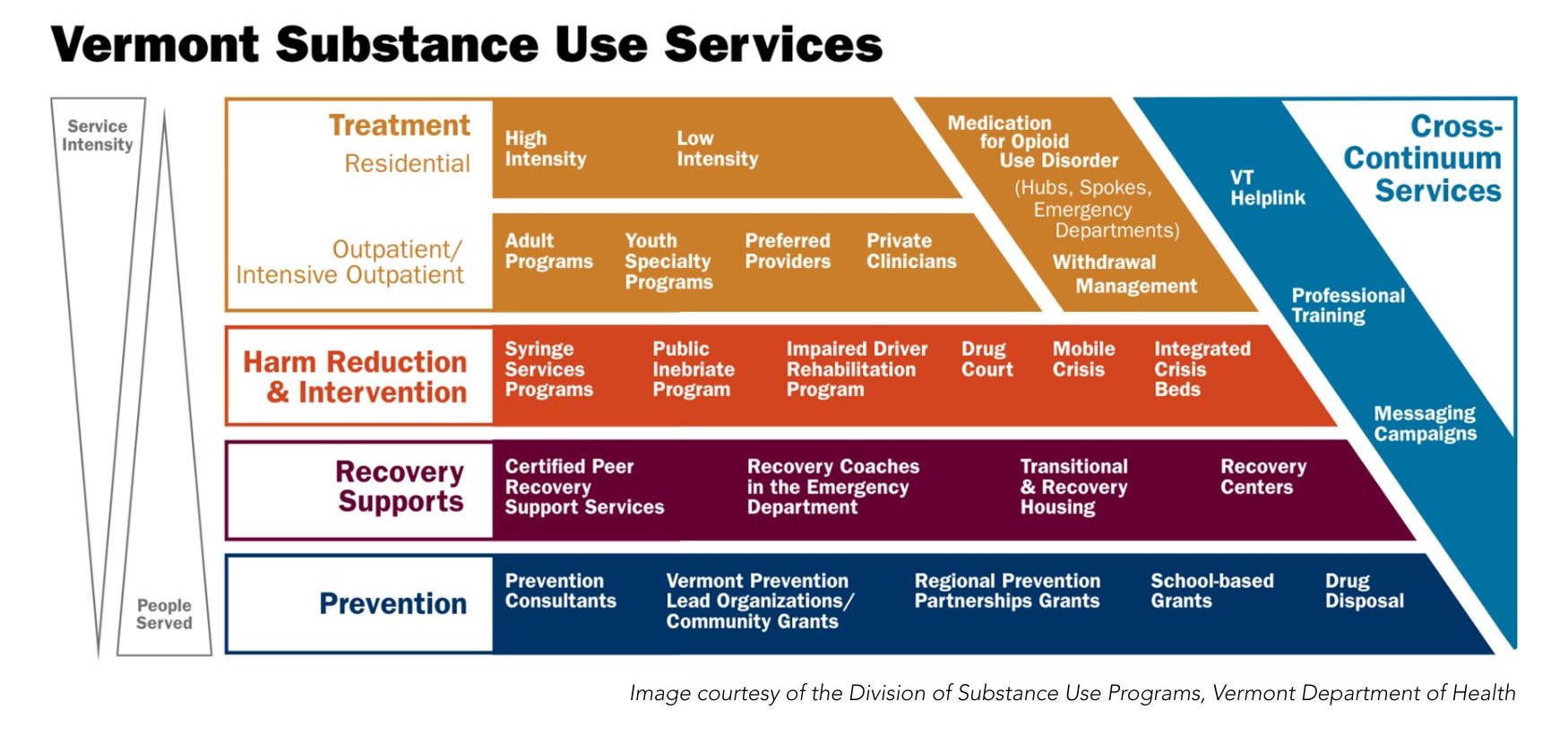
DSU’s Strategic Plan identifies workforce recruitment, workforce retention, training expansion, and public awareness as major statewide priorities through 2028. The plan also frames substance use services not as isolated programs, but as part of a broader “system of care” that includes prevention, intervention, harm reduction, treatment, and recovery support.
That distinction matters.
Because substance use work is not confined to one profession, one degree pathway, or one type of healthcare setting.
Expanding the Definition of Who Belongs in the Field
One of the more striking aspects of the new workforce development resources is how intentionally they challenge the idea that substance use careers follow a single linear pathway.
“Often sometimes [young adults] can get stuck in a very linear phase when thinking about career fields,” said Elizabeth Morris, Manager of Planning and Community Services for DSU. “And I think that can be a challenge… when it comes to the substance use field, you don’t necessarily have to be a clinician.”
That broader framing reflects the reality of the workforce itself.
Many people working in substance use services come into the field through lived or living experience – either personally or through family and community experiences. Others arrive through adjacent professions like nursing, education, public health, counseling, social work, emergency medicine, or peer support.
“What we see in substance use services [is that many people] have lived or living experience, which is something that we really value,” Belcher explained.
The online Careers page attempts to make those pathways more visible by outlining different roles across the continuum of care, potential work environments, education requirements, and credentialing options.
Importantly, the resource hub also acknowledges a shift happening within the profession itself.
“We’re at a turning point now,” Belcher said. “A lot of these jobs that have been around for a long time, we’re now moving them into a more professional sort of realm that have credentialing and certifications associated with them.”
That includes newer certification processes for recovery support specialists and recovery service organizations – efforts designed not only to strengthen care quality, but to legitimize and expand long-term career opportunities within the field.
Accessibility Matters in a Rural State
In Vermont, workforce development conversations almost always come back to geography.
Rurality shapes access to education, healthcare, transportation, training opportunities, and professional networks. That reality heavily influenced how DSU designed its workforce resources.
“We’ve realized that virtual trainings are the way to go,” Belcher said. “Recognizing and embracing the accessibility and effectiveness of virtual trainings is key.”
The impact has been immediate.
According to DSU, the department funded 34 trainings in 2025 that reached 833 participants across Vermont’s substance use services field. Recent virtual trainings on emerging substances and overdose response have drawn some of the highest participation numbers the division has seen.
The Workforce Development Training Opportunities Calendar now aggregates state-supported trainings, continuing education opportunities, and free regional and national offerings into one centralized location. The self-paced learning section similarly provides recorded webinars and professional development materials for people balancing full-time work schedules or licensure requirements.
For a rural workforce already facing staffing shortages, that flexibility is essential.
Training the Workforce Vermont Needs
The workforce development effort is also deeply tied to evolving public health needs.
In a 2025 training needs survey conducted through DSU partnerships, the most requested training topics included:
- New substance use trends
- Substance use and suicidality
- Trauma-informed care
- Motivational interviewing
- Burnout and workforce sustainability
That list tells its own story about what providers are navigating daily.
The work increasingly requires professionals who can respond not only to addiction itself, but to overlapping mental health challenges, trauma, housing instability, suicidality, stigma, and systemic barriers to care.
And while the work can be emotionally demanding, DSU leaders speak about it with remarkable honesty.
“It’s not for the faint of heart,” Belcher said. “But the importance of the work and the difference that people can make in people’s lives is really rooted in that place of passion.”
That passion – combined with stronger infrastructure, clearer career pathways, accessible training, and statewide collaboration – is exactly what Vermont is trying to build toward.
Because workforce development in this space isn’t simply about filling jobs.
It’s about ensuring that every Vermonter, regardless of geography or circumstance, can access compassionate, informed, evidence-based care when they need it most.
And increasingly, Vermont is recognizing that building that future starts with investing in the people doing the work.